
Improve Your Japanese Pronunciation: 6 Essential Things to Practice
(日本語版は下にあります。スクロールしてご覧ください。 Japanese version below.)
Japanese pronunciation can seem simple at first, but many learners struggle with rhythm, long vowels, pitch accent, and timing. Even advanced learners are often misunderstood because these features are rarely taught clearly.
In this guide, we’ll look at 6 essential Japanese pronunciation concepts — including mora, long vowels, pitch accent, and the small っ (tsu) — that can help your Japanese sound more natural and easier to understand.
Why Good Japanese Pronunciation Matters
Many Japanese learners focus heavily on grammar, kanji, and vocabulary, but pronunciation is equally important. Even if your grammar is correct, unclear pronunciation can make communication difficult or lead to misunderstandings.
Features like vowel length, rhythm, pitch accent, and timing all affect how natural your Japanese sounds. Improving your pronunciation can also improve your listening comprehension, since you'll become more aware of subtle sound differences used by native speakers.
For learners who want to work in Japanese, speak confidently, or communicate more naturally, pronunciation practice is an essential part of the learning process.
Let’s look at some of the most important pronunciation features Japanese learners should understand and practice.
Mora: The Rhythm of Japanese
Japanese has moras, which are similar to syllables, but they are rhythmic units (for more on moras, click here). Each mora is pronounced with roughtly equal timing and emphasis. This is important to remember for later points. Although there are some exceptions, one kana (a hiragana or katakana character) is usually one mora. Except for ん (n), each kana is either a vowel sound, or a consonant + vowel sound together.
For the most part, one kana = one mora (or beat). However, there are exceptions like きゃ (kya)、きゅ (kyu)、きょ (kyo). These are one mora each. You can visually differentiate them from others through the small や (ya), ゆ (yu), or よ (yo) characters that follow a bigger kana. In the hiragana chart below, they are listed in the bottom one third of the page.
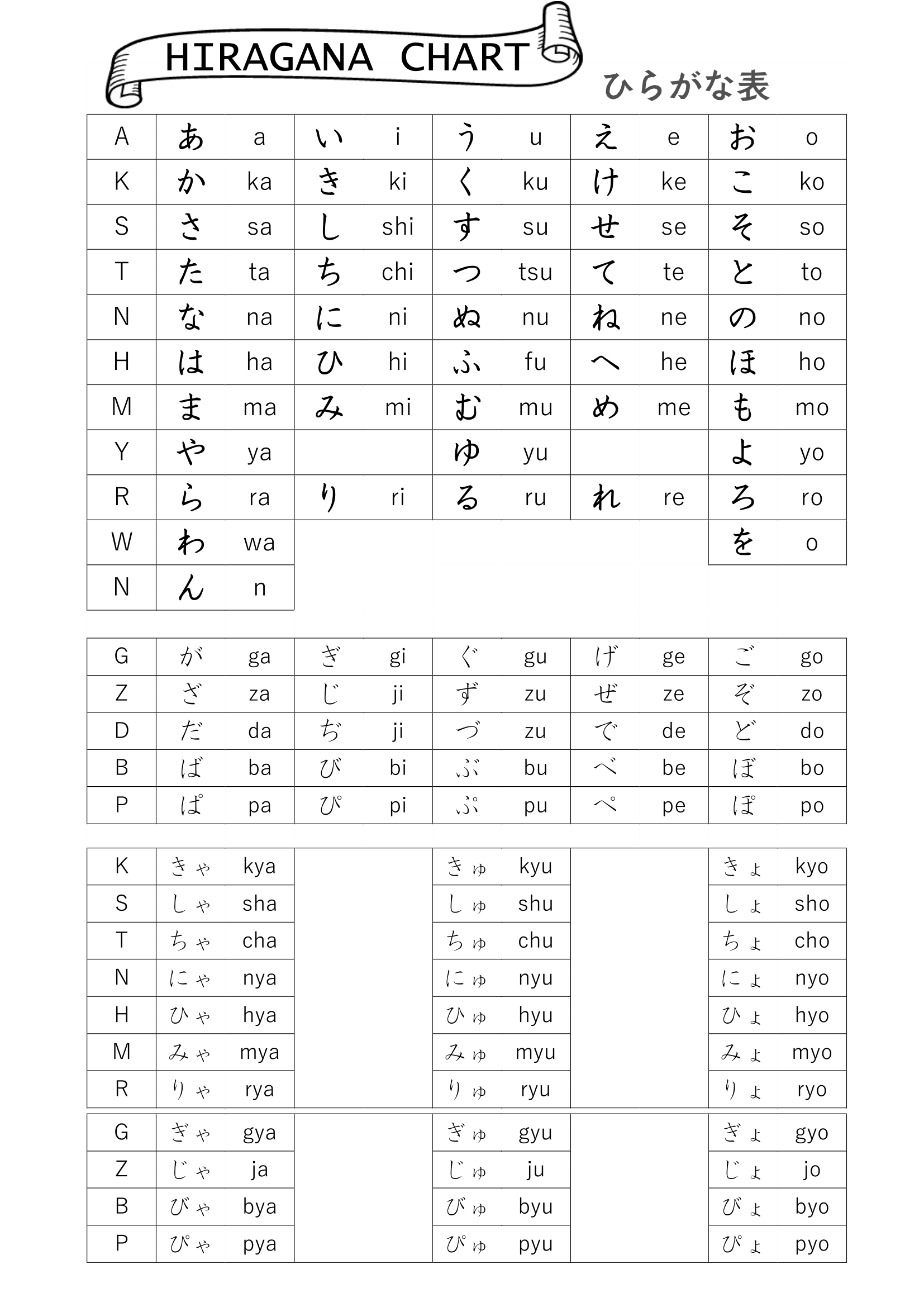
The 5 Japanese Vowels
There are 5 vowel sounds which do not change. As mentioned above, except for one, every kana is either just a vowel sound, or a consonant + a vowel.
In the hiragana chart, you’ll see the five vowel sounds across the top: あ (a), い (i), う (u), え (e), お (o). In the left-hand column, you’ll see a series of consonants beginning in the second row: k, s, t, and so on. Each of these consonants combines with the vowel sound in that column. So, for example, the ‘k’ sound plus the ‘a’ sound is ‘ka’ (か), the ‘t’ sound plus the ‘e’ sound is ‘te’ (て).
Because each kana includes one of the 5 vowel sounds (each of which never change), it’s crucial to pronounce all 5 of them correctly.
To get your own copy of this chart, click here.
Long Vowels Can Change Meaning
Japanese has short (regular length) and long (double length) vowels. Here's one example: おばさん (obasan) is aunt/middle-aged woman, and おばあさん (obaasan, also written as: obāsan) is grandmother/old woman. The difference between a long and short vowel can be significant!
Long vowels can be expressed in a few different ways. They can either be a repetition of the previous vowel sound, as in おばあさん (o-ba-a-sa-n), or with an う (u) as in ひこうき (hi-ko-u-ki) (airplane). A final option can only be used with katakana, which is a line: カード (ka-(long)-do) (card). In every case, the vowel of the previous kana is simply pronounced for double the usual length.
Japanese “R” Sounds Are Not English “R” Sounds
Although in Romaji, ら (ra), り (ri), る (ru), れ (re), and ろ (ro) are written with 'r's, the Japanese sound is quite different from the English “r.” The Japanese sound is called an alveolar tap. This means that the sound is produced by gently tapping the tip of your tongue to the area just behind your top, front teeth. It's a bit like a hybrid sound between an English ‘d’ and an Italian ‘l’. (Confusing? Don't worry! skip to 8:33 in this video to learn more.)
Understanding the Small っ (Sokuon)
The small 'tsu' (っ) is a full mora on it's own, which means it takes a full beat for itself. In Romaji, it's written as a double consonant, and is called a glottal stop. It's pronounced by using the root of your tongue to temporarily blocking the air during speech. In English, we use it for emphasis like in 'Uh-oh!' (If you're having trouble, pronounce it a few times and feel the air stop and go, stop and go.)
Japanese Pitch Accent and Meaning Differences
There are two pitch accents in Japanese: high and low. Each word comes with it's own pre-determined pitch accent pattern. This does not change depending on your emotions or emphasis, but it may change depending on the dialect. (For many, the most notable difference is between standard Japanese and the Kansai dialect.) It can be challenging for Japanese learners to get used to, but the correct pitch accent determines meaning, and learners gradually internalize these patterns through listening and repetition.
Take あめ (ame) for example. It can either mean rain or candy, depending on the accent pattern. Although the kanji are different, the kana are the same, so it's important to get it correct.

When we have the LH (low high) pattern, we have the word for candy. The opposite pattern, HL (high low), is rain. (This is the pattern for standard Japanese. Regional dialects may differ/be opposite.)
Putting it all Together
Let’s take a look at an example. Below, you’ll see three words: bracket, past, and an invitation to write. The first and third word are composed of 3 mora - they’re 3 beats long and each beat is of equal length. The small ‘tsu’ in かっこ (kakko) and the long vowel in かこう (kakō) each get their own beat.
Both かっこ (kakko) and かこ (kako) start high and go low, but かこう (kakō) starts low, goes high, then ends low.

If you don’t get the pitch accent, small ‘tsu’ (glottal stop), and long vowels all pronounced properly, these words may all sound the same. (Just wait until you add かっこう (kakkō) to this collection of words! Depending on the pitch accent pattern, you could be talking about a cuckoo or how someone looks!)
How can we improve pronunication?
Here are 3 great ways to improve your Japanese pronunciation:
Shadowing/imitating (I highly recommend adding hand movements to this): When you shadow or imitate a native speaker’s pronunciation, move your hand up or down, depending on the pitch accent pattern of that word. Listen carefully and practice lots! (In his video listed below, Dogen moves his hand up and down as he speaks.)
Clapping: For the clapping exercise, clap once for each mora. In the example above with かっこ (kakko), かこ (kako), and かこう (kakō). These words should have 3, 2, and 3 claps, respectively.
Join Japanese Phonetics 101: If you want structured support improving your Japanese pronunciation, pitch accent, and speaking rhythm, check out Japanese Phonetics 101 — my online course designed to help learners sound more natural and confident in Japanese. (This course was build shortly this blog was posted.) Not sure whether you' want to join yet? No problem - check out this free two-part video series instead!
Question✨
Both ‘Tokyo’ and ‘Kyoto’ are often mispronounced by non-native speakers. Do you know how many mora are in each word? What’s the pitch accent pattern for each one?
Scroll down below the videos for the answer!
For more examples and explanations, check out these videos!
Japanese pronunciation overview!
Learn & Practice pitch accent patterns with lots of helpful visuals.
Dogen’s Japanese Phonetics series, Episode 1 (It’s quite interesting; I recommend the full series.)
Answer
とうきょう (tōkyō): 4 mora, LHHH pattern
きょうと (kyōto): 3 mora, HLL pattern
*Note: A while after this post was written, Japanese Phonetics 101 was created! This online course focuses on pronunciation and pitch-accent and is great for learners at any level. To learn more, click here!
Frequently Asked Questions About Japanese Pronunciation
-
Japanese pronunciation is often considered easier than English pronunciation because there are fewer sounds overall and most kana are pronounced consistently.
However, many learners still struggle with rhythm, long vowels, pitch accent, and timing because these features work very differently from English. Even advanced learners can sound unnatural if they don’t pay attention to pronunciation practice!
-
A mora is a rhythmic unit in Japanese that is similar to a syllable, but not exactly the same. Each mora is pronounced with roughly equal timing and emphasis. For example, かこ (kako) has 2 mora, while かっこ (kakko) has 3 because the small っ counts as its own mora. Understanding mora is important for developing natural Japanese rhythm and pronunciation.
-
Japanese pitch accent refers to the pattern of high and low pitch used when pronouncing words. Each word has its own pitch accent pattern, and changing the pattern can change the meaning of the word. For example, あめ (ame) can mean either “rain” or “candy” depending on the pitch pattern used. Pitch accent varies by dialect, but it plays an important role in sounding natural and being understood clearly.
-
The small っ (small tsu), also called a sokuon, represents a pause or blocked sound and counts as its own mora. It changes both pronunciation and meaning. For example, かこ (kako) and かっこ (kakko) are pronounced differently because the small っ (tsu) adds an extra beat and a brief pause before the consonant.
English speakers often overlook this timing difference, but it is an important part of natural Japanese pronunciation.
-
No — you do not need perfect pitch accent to communicate in Japanese. Many learners speak clearly and successfully without mastering every pitch pattern.
However, improving your pitch accent can help your Japanese sound more natural and can improve listening comprehension. Over time, learners can internalize common patterns through listening, shadowing, and repeated exposure to native speech.
Check out this free workshop to learn more!
-
Some common pronunciation mistakes English speakers make in Japanese include:
stressing syllables unevenly instead of following Japanese mora timing
confusing short and long vowels
pronouncing the Japanese “r” like an English “r”
ignoring the small っ (tsu) pause
using English-style intonation patterns instead of Japanese pitch accent
Because English and Japanese rhythm systems are very different, these small pronunciation features can strongly affect how natural spoken Japanese sounds.
日本語の発音: 覚えておくべき6つのポイントと練習法
今回のブログは日本語学習者対象で、覚えておくべき6つのポイントと発音の練習法をご紹介しております。
簡単にご説明しますと次のようにまとまります。
日本語は音節ではなく、拍(モーラ)でできています。
日本語には母音が5つありまして、その母音の発音は英語と違って変わりません。
英語と違って短母音と長母音があります。
ラ行はローマ字で r と書かれていますが、英語の r とは違います!(詳しくはこちらの動画をご覧ください。)
小さい「つ」は一つの拍で、息を止めることによって発音されます。英語では ‘Uh-oh!’という時に使います。
日本語はアクセントがあります。例えば、雨と飴。同じ「あめ」でもアクセントによって意味が変わってしまいますね。起伏式と平板式があり、起伏式には頭高型、中高型、尾高型、に分けられていますが、今回のブログでは簡単に標準語のアクセントパターンで聞き取りや発音の重要さをご説明しました。
特に英語母語話者にとって難しい発音のポイントかもしれないので、練習法を二つご紹介しました。
聞いて真似る!シャドーイングですね。スピーキングの練習の際に、手を使ってアクセントパターンと同じように上げたり下げたりしてください。 Dogen さんのこの動画と同じようにするこをとおすすめします。
手をたたく!拍のリズムに合わせて手をたたくことをおすすめします。
最後に「東京」と「京都」の拍の数・アクセントパターンについてクイズを出し、おすすめの動画をリストアップいたしました。
